There are a lot of birds to find around Katy, and as many as 11,131 species to find around the globe. If you’re an avid birder, that means 11,131 species you could see and hear with your own eyes and ears. For those with hearing loss, part of the birding experience depends on the help of their hearing aids.
Let’s look at three ways your hearing aids can enrich your birding adventures this season.
Aiding Binaural Hearing
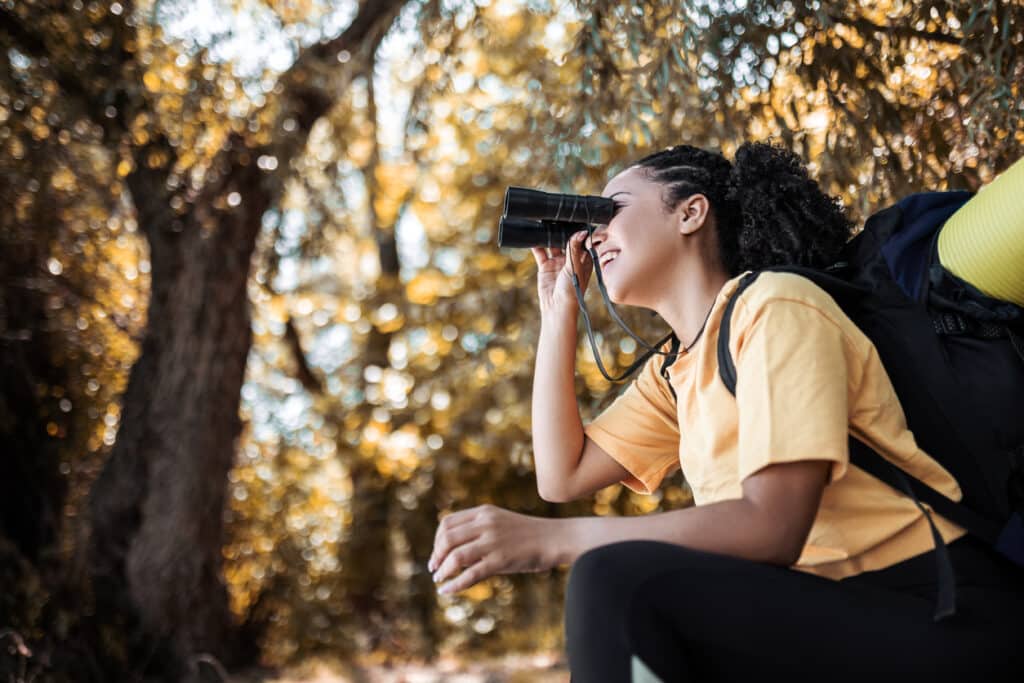
Every birder knows that sometimes, your ears are the ones to alert you to a nearby species. Your ears work as a team to detect slight differences in when a sound arrives at each ear (interaural time difference) and how loud it is on each side (interaural level difference)[1].
Hearing loss can interfere with those signals, making it harder to pinpoint exactly where a sound is coming from. Using hearing aids in both ears helps restore their ability to work together, enabling you to locate songs and the birds that accompany them.
Adjusting Frequency
You might have heard that birdsong is the first sound to go with hearing loss. That disappearance occurs because hearing loss often starts by muffling high-pitched sounds and gradually worsens from there.
Hearing aids shift higher-pitched bird calls into a lower range that your ears can pick up. With their help, you can catch things from the delicate tweet of the House Finch to the bouncy call of the American Robin.
Training Through Bluetooth®
Birding is a sport like any other. The more you train, the easier it will be! One way to train for your next birding adventure is by connecting your hearing aids to your phone or laptop via Bluetooth and listening to different bird calls to improve identification skills.
Don’t wait to experience birding in surround sound. Contact Today’s Hearing today to schedule your hearing loss treatment consultation.
[1] ¹ Zheng, Y., Swanson, J., Koehnke, J., & Guan, J. (2022). Sound localization of listeners with normal hearing, impaired hearing, hearing aids, bone-anchored hearing instruments, and cochlear implants: A review. American Journal of Audiology, 31(3), 819–834. https://doi.org/10.1044/2022_AJA-22-00006