Going on a long bike ride, taking a run around Katy Park or hitting the gym for a high-intensity fitness class are all great ways to meet your weekly 150 minutes of exercise.[1] However you like to work out, you need to take ear protection into account to ensure your exercise doesn’t end in hearing damage.
There are two main sources of noise exposure during workouts: headphones and music in fitness classes.
Headphones
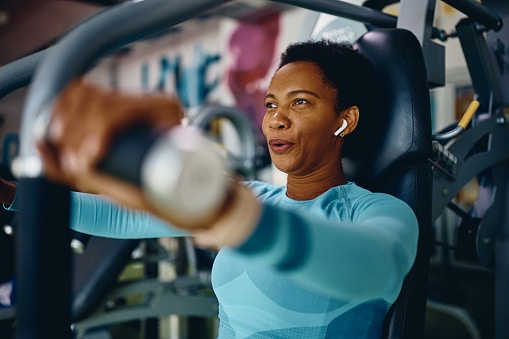
Commercially available headphones can reach sound levels exceeding 125 decibels (dB).[2] Prolonged exposure to any sound above 85 dB can cause hearing loss, and any sound above 120 dB can cause near-immediate damage. Whenever you’re working out, avoid turning your music up to maximum volume. Instead, opt for noise-canceling or over-the-ear headphones that block out distracting sounds, allowing you to play your music at a lower volume.
You can also set a decibel limit on your smartphone in the “headphone safety” settings. Set it to no higher than 80 dB—that will ensure even long workouts don’t end in hearing damage.
Fitness Classes
A 2026 study following participants taking hour-long fitness classes found that the mean volume of louder classes was 91.4 A-weighted decibels (dBA) and 88.5 dBA for quieter classes.[3] Depending on your type of class and the instructor’s music preferences, your fitness classes may reach even higher volumes.
In general, if sound feels sharp, causes ringing in your ears or leaves your hearing muffled after class, the volume is too high. Consider wearing lightweight earplugs that lower the volume but don’t completely block out the music or instructor’s voice.
If you notice signs of hearing damage, like ringing in the ears or difficulty understanding speech, call us at Today’s Hearing for a hearing test with one of our specialists.
[1] American Heart Association. (n.d.). American Heart Association recommendations for physical activity in adults and kids. American Heart Association. https://www.heart.org/en/healthy-living/exercise-and-physical-activity/fitness-basics/aha-recs-for-physical-activity-in-adults
[2] Kaur, G., Anand, A., Chakraborty, P., Pravin, T., Khalilullah, M., Tarafdar, R., Raj, D., & Mukherjee, S. (2025). Use of Headphones and Its Impact on Hearing: A Cross-Sectional Survey of Medical, Nursing, and Pharmacy Students. Cureus, 17(11), e96900. https://doi.org/10.7759/cureus.96900
[3] Hori, K., Wee, C. P., Liu, N., Parsons, J., & Choi, J. S. (2026). Lower Music Volume Levels in Fitness Class and Perceived Exercise Intensity. JAMA otolaryngology– head & neck surgery, 152(5), 465–471. https://doi.org/10.1001/jamaoto.2026.0028